Ask every supplier to quote for the same pupil numbers, pouch design, opening-base layout and required delivery date. A useful quote separates the equipment from the support and tells you what happens when something needs replacing. This checklist helps you compare the whole school-day setup, not just a pouch.
- Compare mobile phone pouches for schools against one written specification, not different bundles.
- Include opening bases, spare pouches, delivery and staff support in each quote.
- Before The Internet supplies Fully Sealed pouches for schools that want screens covered while pupils retain their phones.
- Test a sample and rehearse dismissal before committing to a whole-school order.
Why the specification matters
Two quotes can describe very different jobs. One might cover enough pouches for pupils, while another includes opening bases, signage and briefing materials. Neither headline tells you whether your school can run the system at every entrance and exit.
Start with your daily routine. Where do pupils arrive? Who checks that phones are put away? Where does a pupil go when they leave for an appointment? Those decisions belong in the request, before a supplier chooses the equipment.
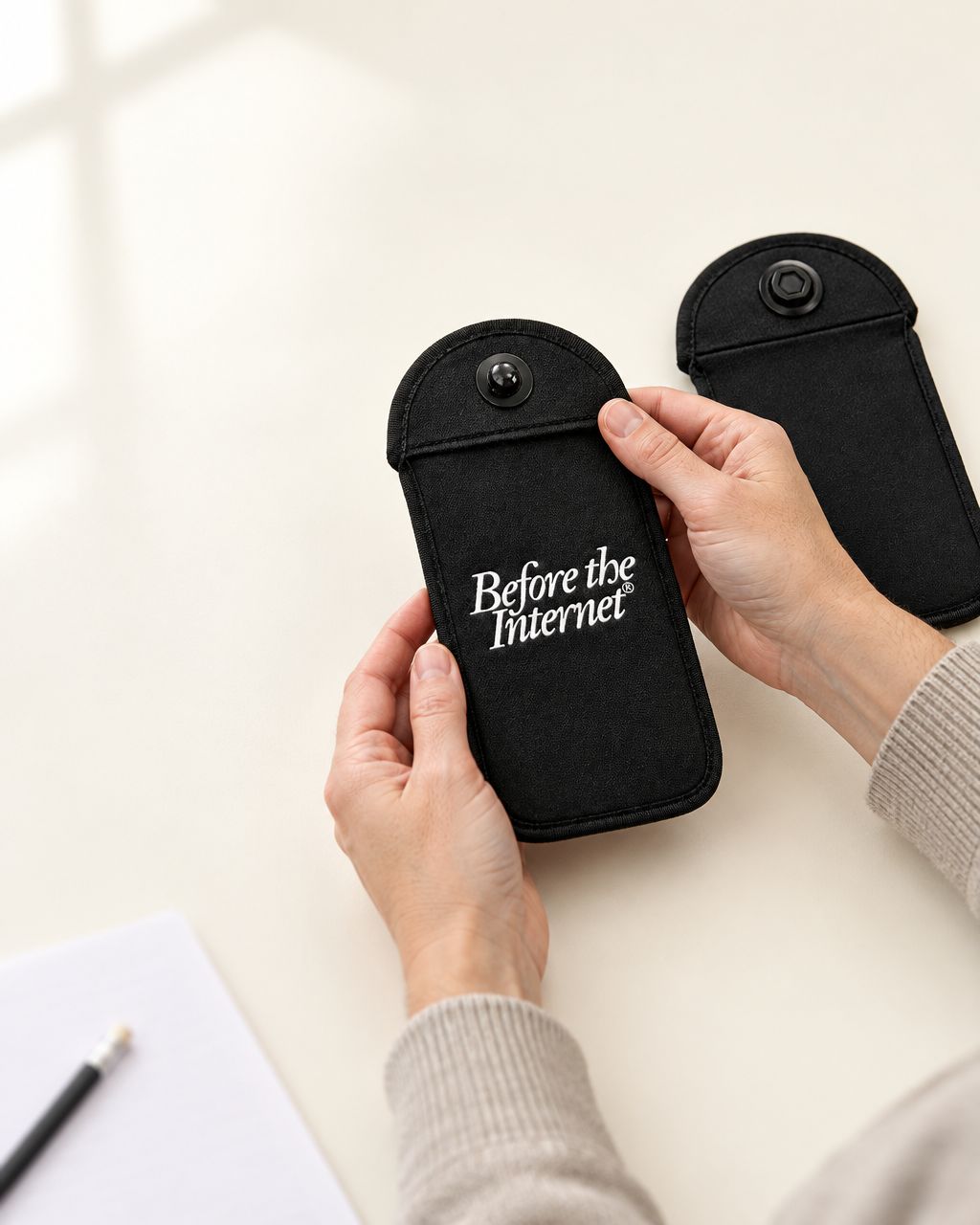
The school phone pouch setup shows the basic arrangement: pupils secure their own phones, carry the pouch in their bag and open it at a designated base. Your quote needs to turn that arrangement into something your staff can operate.
Mobile phone pouches for schools: what should a quote include?
Send one specification to every shortlisted supplier. Ask suppliers to mark each requirement as included, excluded or needing further discussion. An unanswered question is not an included service.
| Item | Put in your request | Ask the supplier to confirm |
|---|---|---|
| Pupil coverage | The year groups and pupil numbers covered | The exact number of pouches supplied |
| Pouch design | Whether screens must be inaccessible | The model and how it closes and opens |
| Phone fit | The phones and cases you need to accommodate | Internal dimensions and how samples can be tested |
| Opening points | The entrances, exits and office locations involved | The number and type of bases included |
| Spare equipment | Your plan for forgotten or damaged pouches | Separate replacement terms and ordering arrangements |
| Staff preparation | Who will supervise the routine | Briefing materials, demonstrations and support included |
| Delivery | The address and required arrival date | The delivery commitment and any dependencies |
| Aftercare | Who will deal with problems | Contact route, warranty terms and exclusions |
Keep the completed version with your purchasing paperwork. If a supplier changes the specification, ask for the change in writing rather than relying on a call summary.
1. Define who needs a pouch
Use the number of pupils covered by the policy, not simply the total roll. A sixth-form arrangement, a medical access plan or a phased introduction changes the equipment you need. Document those decisions without sharing unnecessary personal information with suppliers.
Separate the initial issue from spare stock. There is no useful universal spare percentage without knowing how your school will allocate, check and replace pouches. Ask for spare equipment as a distinct line so you can change it without rebuilding the entire quote.
Include these points in the brief:
- Which year groups are covered.
- Whether pupils keep an assigned pouch or return one daily.
- How forgotten pouches will be handled.
- Who approves a replacement.
- Whether a pilot will precede the full order.
2. Specify the access you want to prevent
A pouch that hides the screen serves a different purpose from one that leaves the screen visible. If the aim is to prevent routine messaging and scrolling, write that requirement plainly. Do not assume that every product described as a phone pouch provides the same restriction.
Before The Internet offers Fully Sealed and Semi-Frosted designs. Both cover the cameras and use an opening base, but only Fully Sealed is opaque on both sides. Semi-Frosted leaves the screen visible and allows interaction through its panel.
| Design | Best for | Useful feature | Limitation to account for |
|---|---|---|---|
| Fully Sealed | School routines requiring covered screens | Opaque on both sides; phone stays with the pupil | Routine phone access requires a base and an agreed procedure |
| Semi-Frosted | Arrangements where screen interaction is intended | Screen remains visible through the panel | It does not provide the same screen restriction |
Choose the access rule first, then the pouch. Neither design replaces an individual medical or support plan. Where a pupil needs a particular phone function, settle that requirement with the appropriate school staff and test the proposed arrangement before rollout.
3. Plan the opening bases around your site
Count the routes pupils actually use. A single main entrance does not mean a single departure route: buses, clubs, appointments and separate year-group exits can create different needs during the day.
Before The Internet normally suggests about 2 opening bases per 100 pouches. Treat that as an initial equipment guide, not proof that a particular layout will avoid queues. A school ordering 500 pouches would begin that discussion at about 10 bases, then check where pupils leave and who supervises each point.
Ask the supplier to explain the proposed allocation. If all the equipment is placed at one exit, pupils using another route still need a workable process. Include an office location for authorised access during the day and agree how staff will handle a base that is unavailable.
Have a staff member walk the plan before signing it off. A drawing is useful; following the route with a bag and a sample pouch is better.
4. Separate included materials from optional help
A supplier saying that support is included is not enough. Ask what staff will receive, who it is intended for and when it arrives. A parent letter template helps communication, but it is not the same as a staff demonstration.
The current Before The Internet school offer lists pouches, opening bases, signage, a staff briefing guide and parent letter templates, with base placement planned before the first day. Ask for those components to be itemised in your own quote so the written offer matches the setup you expect.
Check these details across all suppliers:
- Whether staff receive written instructions, a demonstration or both.
- Whether reception staff are covered as well as teaching staff.
- Which materials the school needs to adapt.
- How questions are handled before rollout.
- Who is responsible for briefing staff who join later.
Do not hand your school policy to a template. Parent contact, early departure, medical access and incident handling still need school-specific decisions.
5. Confirm the delivery dependencies
Give suppliers a required arrival date, not just a planned launch date. Equipment needs to arrive before staff can test it, check quantities and prepare the routine. Ask the supplier to identify every approval or payment step that starts its delivery timetable.
Keep plain and crest-printed orders distinct. Artwork introduces an approval stage, so ask for a timetable tied to your actual design and order rather than copying a general website estimate into your rollout plan.
Your written confirmation should identify:
- What starts the delivery timetable.
- Whether artwork approval affects it.
- The delivery address and receiving contact.
- Whether the equipment arrives together or in separate consignments.
- What happens if the required arrival date cannot be met.
Do not announce a fixed launch date to families before the school has accepted a realistic delivery commitment.
6. Ask about replacements before you need them
A whole-school purchase is not finished when the first box arrives. Ask how you obtain an extra pouch or base, whether the same design will be supplied, and what information the supplier needs to identify the original order.
Request the warranty wording and exclusions. Distinguish a manufacturing fault from wear, loss or deliberate damage; the school needs to understand which situations are covered. Do not treat an assurance that the product is durable as a replacement policy.
Ask about compatibility too. An additional pouch is only useful if it works with the bases your school already has. Keep model details and supplier contacts in a place that survives a change of staff.
Why do school pouch quotes differ?
Different specifications produce different offers. Before comparing totals, check whether each supplier has quoted for the same job.
The main points to reconcile are:
- Quantity: initial pupil issue and spare stock should be distinguishable.
- Design: screen-covered and screen-visible pouches meet different needs.
- Opening equipment: base numbers and placement determine the operating arrangement.
- Customisation: artwork and crest printing need their own approval process.
- Delivery: the destination and required date belong in the specification.
- Support: written materials, demonstrations and ongoing contact should be explicit.
If one quote includes something the others omit, request a revised like-for-like version. You can then judge the difference rather than assuming a lower total means better value.
Should a school buy or rent phone pouches?
A daily school routine and a one-off event are different purchasing decisions. Before The Internet describes schools as usually buying, while most one-off events rent. The practical question is how long you need the equipment and who will manage it between uses.
| Arrangement | Best for | Practical benefit | Question to settle |
|---|---|---|---|
| Purchase | Repeated school-day use | Equipment remains with the school for its ongoing routine | How will replacements and new pupil intake be handled? |
| Rental | A defined, temporary use | Equipment is supplied for an agreed period | What are the return, counting and damage terms? |
For a pilot, ask what temporary arrangement the supplier can offer rather than assuming a particular rental or sample scheme exists. Compare that proposal with a staged purchase using the same written requirements.
Can a school compare suppliers without choosing on price alone?
Yes. Use a sample demonstration and a completed specification alongside each written quote. The aim is to establish whether the equipment supports your school routine, not to reward the longest list of features.
Give the same practical tasks to every supplier. Test representative phones with their cases, ask a member of staff to operate the closure, and rehearse an authorised early departure. Record what worked, what needed explanation and what remained unresolved.
Do not infer that pouches alone guarantee better results. A supplier can explain its equipment; your school still needs a consistent policy, staff ownership and a way to handle exceptions.
A brief you can send to suppliers
We are reviewing mobile phone pouches for our school. Please quote against the specification below and identify anything excluded or needing confirmation.
- School name, delivery address and purchasing contact.
- Pupil numbers and year groups covered.
- Required screen-access restriction and representative phone sizes.
- Initial pouch quantity and separately identified spare stock.
- Proposed opening points, with a site plan if available.
- Target arrival date and intended start date.
- Any crest-printing requirement.
- Staff materials and support required.
- Written replacement, warranty and delivery terms.
Ask for the response in one document. Keep changes dated so governors or purchasing colleagues can see which version they are approving.
FAQ
What should I send a school phone pouch supplier?
Send pupil numbers, year groups, the required pouch design, proposed opening points and the required arrival date. Ask for spare equipment, support and delivery terms to be itemised.
How many opening bases should a school request?
Before The Internet normally suggests about 2 bases per 100 pouches as a starting point. Check that allocation against your exits, office access and dismissal routine before accepting a layout.
Do pupils hand their phones to staff?
With Before The Internet's school pouch arrangement, pupils secure and carry their own phones. Staff still need a procedure for checking compliance and managing authorised access.
Are opaque and screen-visible phone pouches the same?
No. An opaque pouch covers the screen, while a screen-visible design allows a different level of access. Specify the restriction your school needs before choosing a model.
Should schools request a sample before ordering?
Request a sample arrangement and test it against your actual routine before committing to a full order. Confirm any sample terms directly with the supplier rather than assuming samples are free.
Can a pupil with a medical need keep access to their phone?
The school must decide an appropriate individual arrangement with the relevant staff and family. Do not assume a screen-visible pouch is suitable for every medical need; test the required function.
How quickly does Before The Internet respond to a quote request?
Before The Internet states that a person replies to every quote within 24 hours. Send your pupil numbers and required dates so the response can address your school setup.
One last check before signing
Ask a member of reception staff to rehearse a pupil leaving early. That small exercise checks the opening point, staff instructions and exception procedure together. If the route is unclear in a rehearsal, settle it before launch.
When your brief is ready, request a school quote. Keep the same quantities, pouch design and dates when comparing the response with other suppliers.